
Introduction
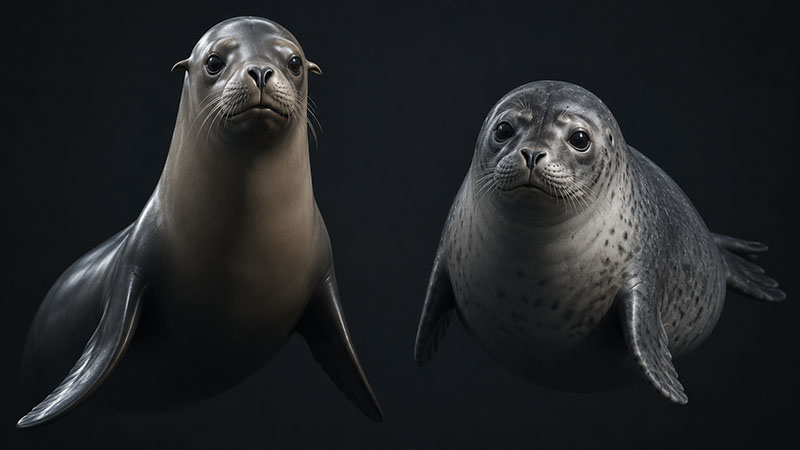
Confused? You’re definitely not alone! Seals and sea lions both live in the ocean, both have flippers, and both spend lots of time swimming. At first glance, they can look almost identical.
But once you know a few simple clues, telling them apart becomes much easier!
Let’s dive in and explore the differences.
Where They Live (Habitat)
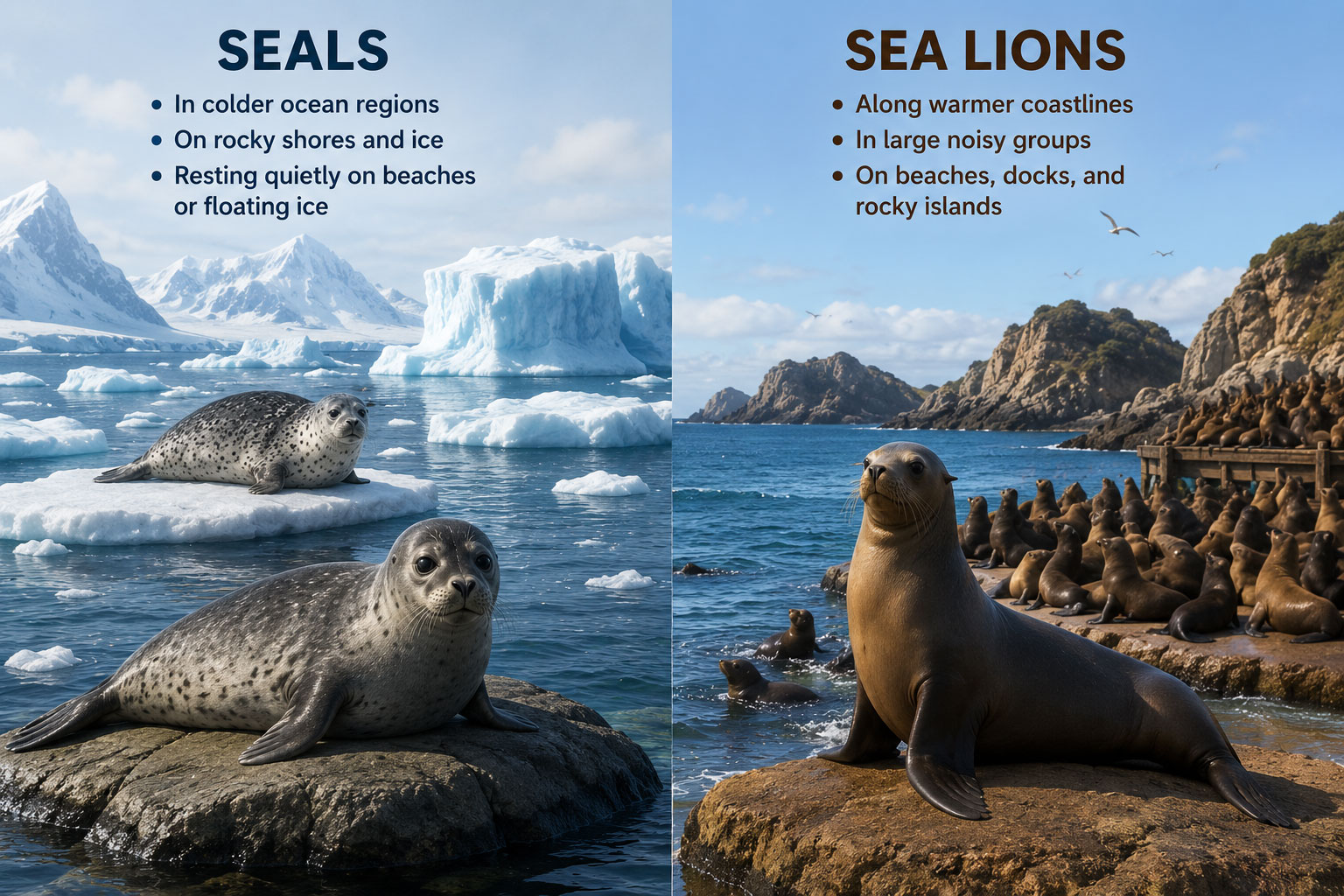
Both seals and sea lions live along coastlines around the world and spend much of their lives in the sea.
Seals are usually found:
- In colder ocean regions
- On rocky shores and ice
- Resting quietly on beaches or floating ice
Sea lions are often found:
- Along warmer coastlines
- In large noisy groups
- On beaches, docks, and rocky islands
Sea lions are more social and are often seen gathering in big colonies.
Appearance (How They Look)
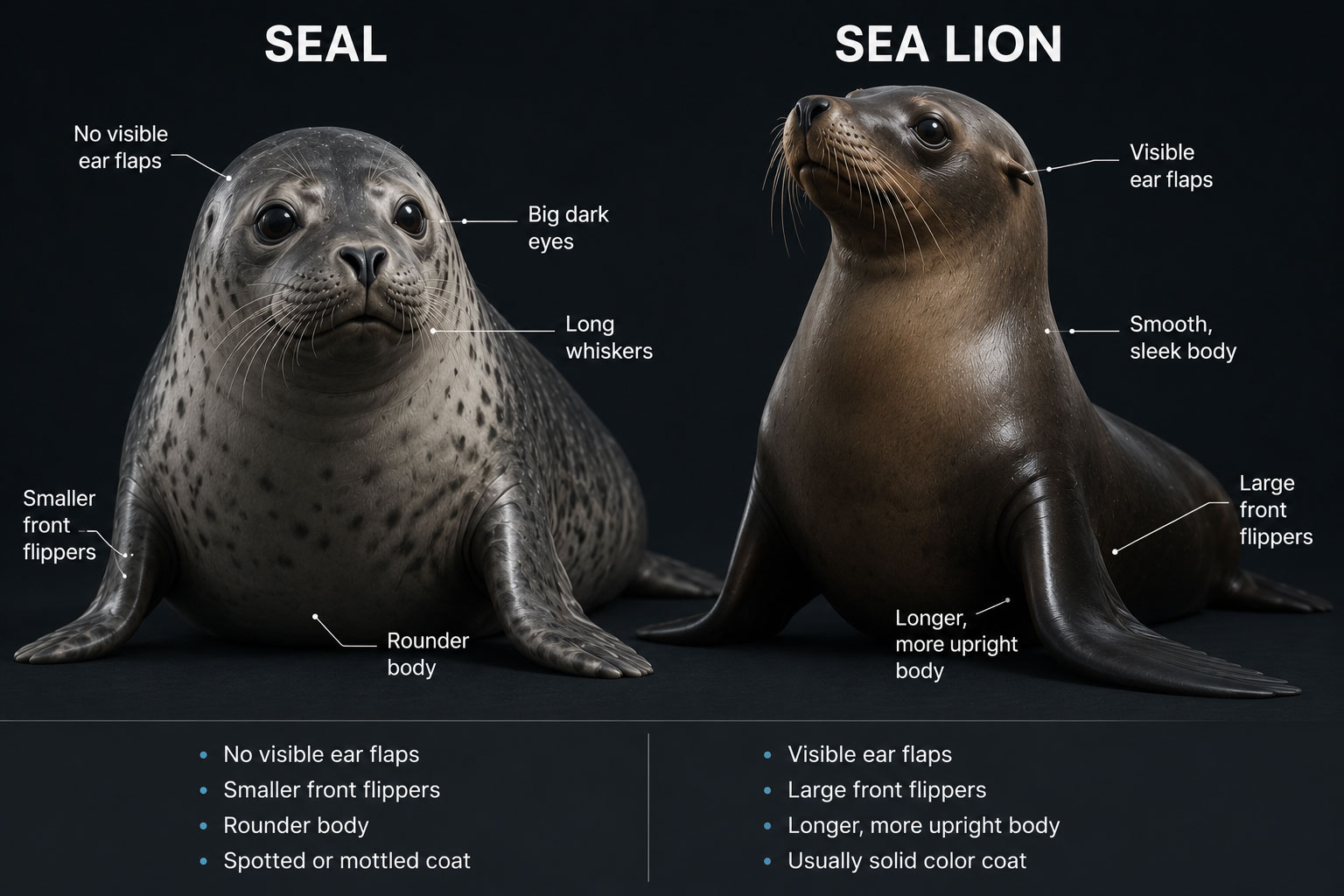
Image: Seal Sea Lion appearance
This is the easiest way to tell them apart!
Seals:
- Smaller front flippers
- Rounder bodies
- No visible ear flaps
- Big dark eyes and whiskers
Sea Lions:
- Large front flippers
- Longer, more upright bodies
- Visible external ear flaps
- Often appear smoother and leaner
If you can see little ears sticking out, it’s probably a sea lion!
Movement (Big Clue!)
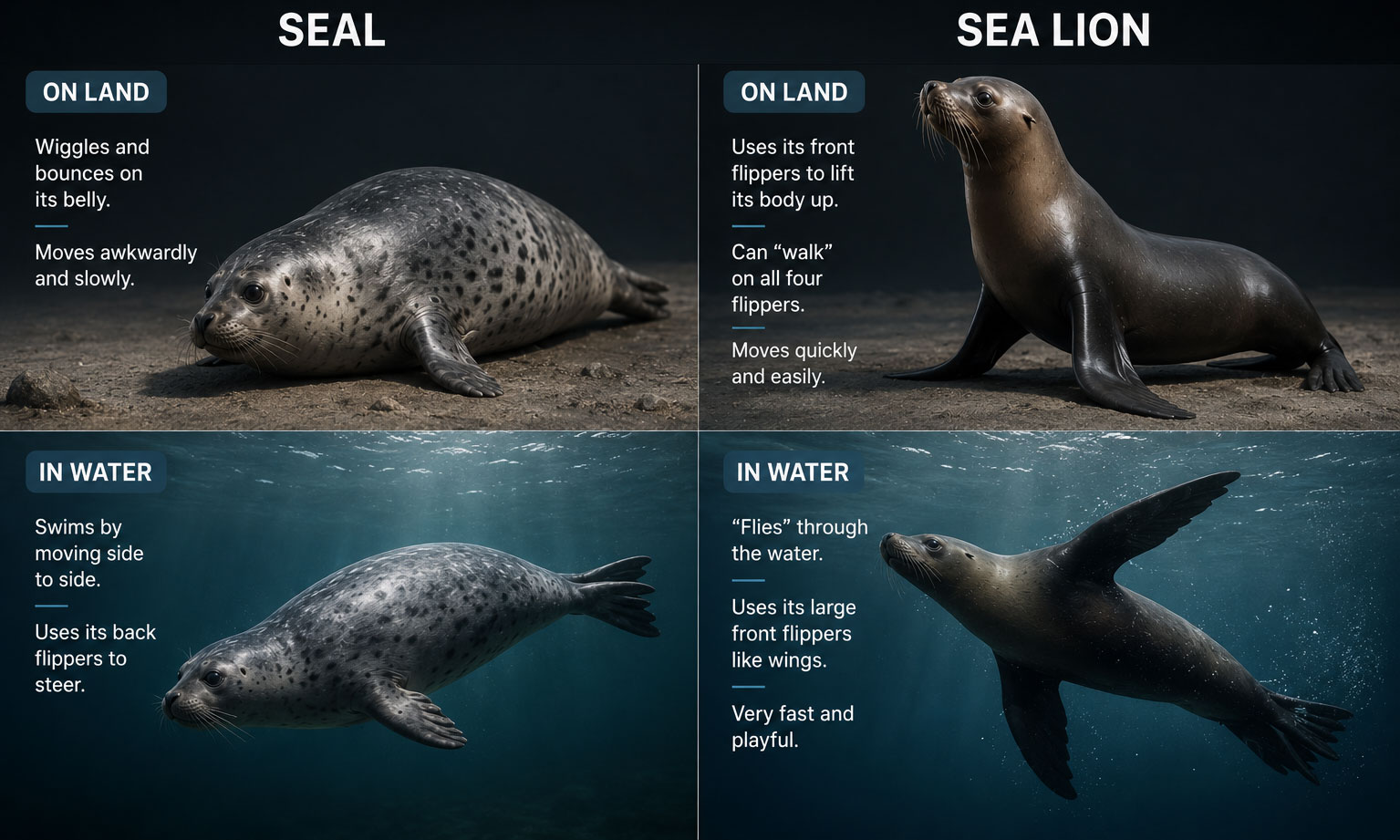
Watching how they move on land is another great clue.
Seals:
- Wiggle and bounce on their bellies
- Move awkwardly on land
- Use their back flippers to steer in water
Sea Lions:
- Can rotate their back flippers underneath themselves
- “Walk” on all four flippers
- Move much faster on land
Sea lions are much more agile out of the water than seals.
Swimming Style
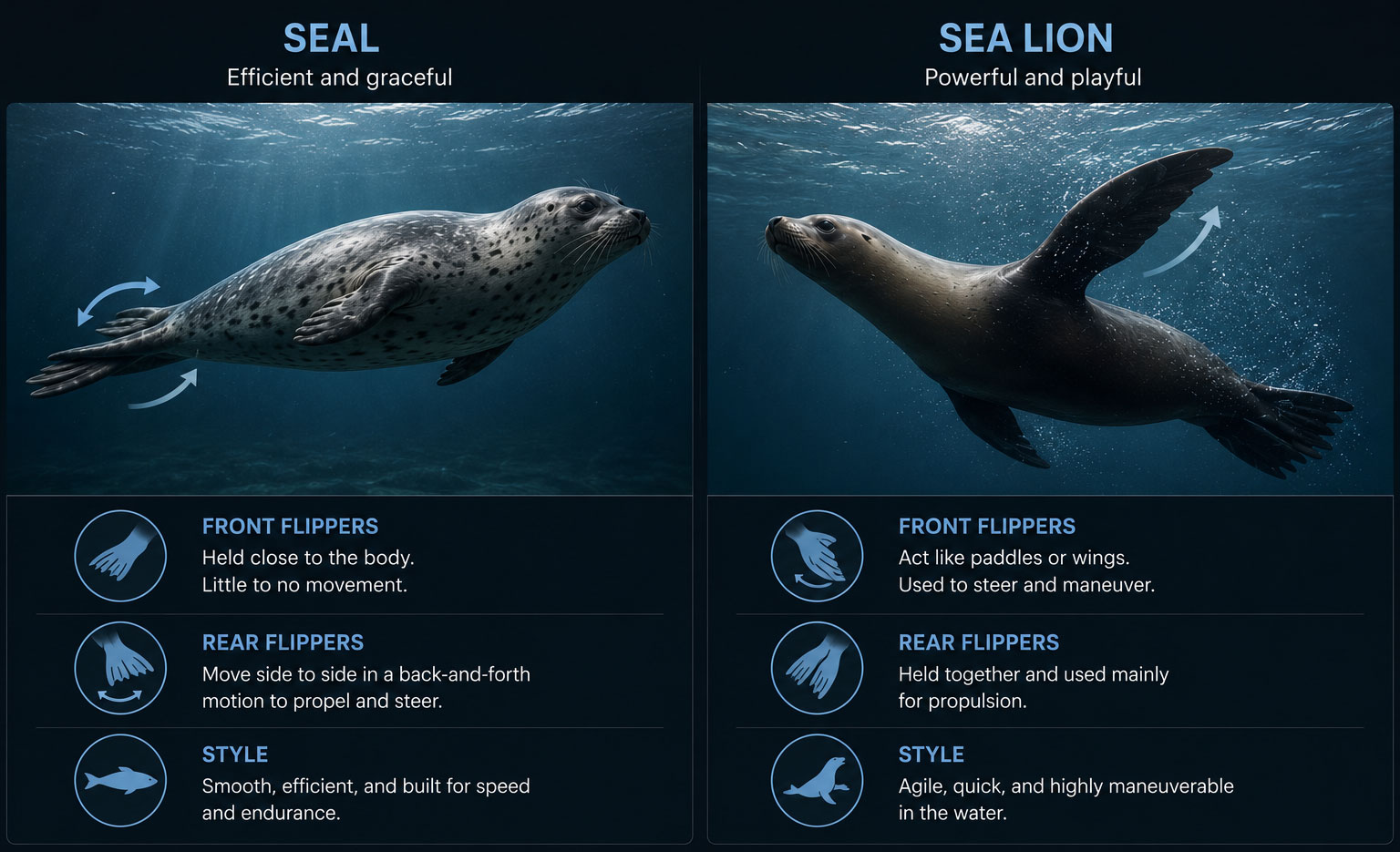
Both are excellent swimmers, but they swim differently.
Seals:
- Move side to side like fish
- Use their back flippers for power
- Swim smoothly and quietly
Sea Lions:
- Use their large front flippers like wings
- “Fly” through the water
- Are very fast and playful swimmers
Sea lions often look more energetic and acrobatic in the water.
Sounds (Another Big Clue!)
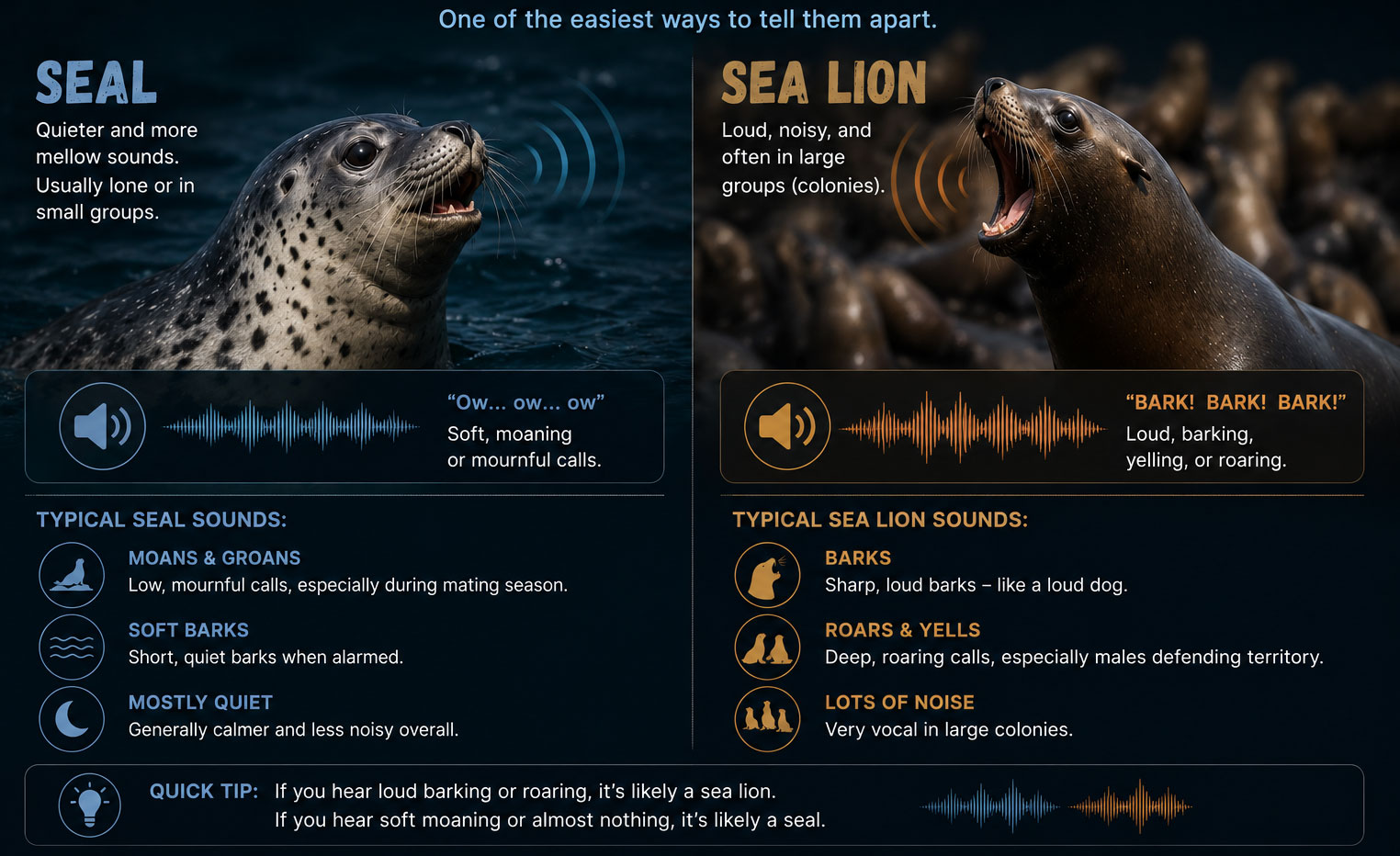
You can often hear sea lions before you see them!
Seals:
- Usually quieter
- Make soft grunts or growls
Sea Lions:
- Loud barking calls
- Very noisy in groups
That famous “arf arf arf!” sound at zoos is usually made by sea lions.
Fun Fact!
Sea lions are often trained in aquariums and marine parks because they are highly intelligent and learn tricks quickly.
Seals are usually more shy and prefer to avoid people.
Quick Summary Table
| Feature | Seal | Sea Lion |
|---|---|---|
| Ears | No visible ears | Visible ear flaps |
| Front Flippers | Small | Large |
| Movement on Land | Wiggles on belly | Walks on flippers |
| Swimming Style | Uses back flippers | Uses front flippers |
| Sound | Quiet grunts | Loud barking |
| Social Behaviour | More solitary | Very social |
Tip for Kids
Look at the ears!
- No visible ears? → It’s a seal
- Tiny ear flaps sticking out? → It’s a sea lion
That’s one of the fastest ways to tell them apart!