
Introduction
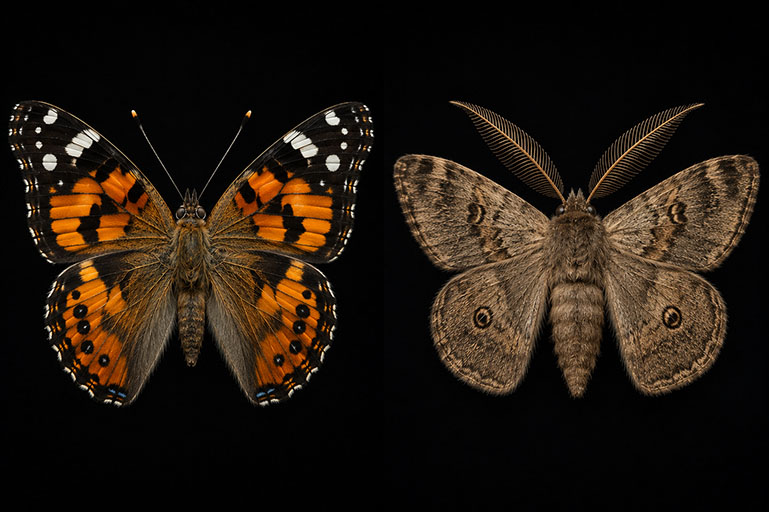
Confused? You’re definitely not alone! Butterflies and moths both have wings covered in tiny scales, both start out as caterpillars, and both sip nectar from flowers. At first glance, they can look almost identical.
But once you know a few simple clues, telling them apart becomes much easier!
Let’s dive in and explore the differences.
Antennae (The Easiest Clue!)
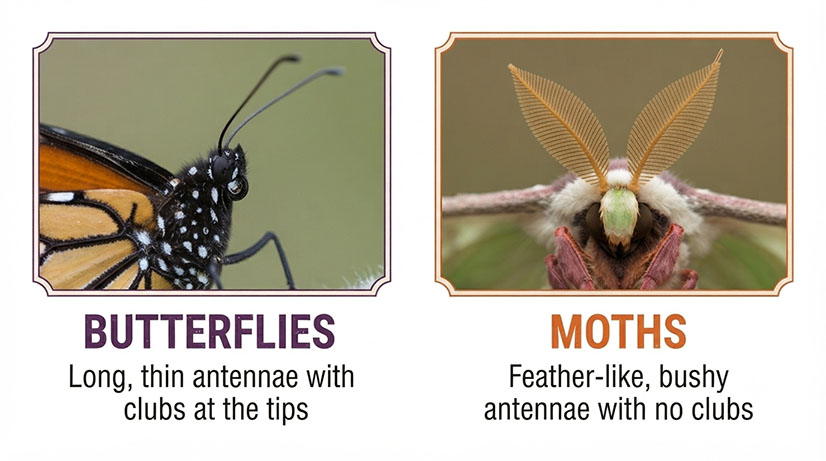
This is the most reliable way to tell them apart!
Butterflies:
- Long, thin antennae
- Little clubs or bulbs at the tips
Moths:
- Feather-like, bushy, or thread-like antennae
- No clubs at the tips (often looking like little feathers or plain strings)
If you look closely at the head and see clubbed tips, it’s a butterfly!
When They Are Active (Time of Day)
Watching when they fly around is another great clue.
Butterflies:
- Diurnal (active during the day)
- Love sunny weather to warm up their wings
- Sleep or rest at night
Moths:
- Mostly nocturnal (active at night)
- Drawn to porch lights and lamps after dark
- Rest hidden away during the day
While there are a few daytime moths, the vast majority follow this strict schedule.
Resting Position
How they hold their wings when they land tells a big story.
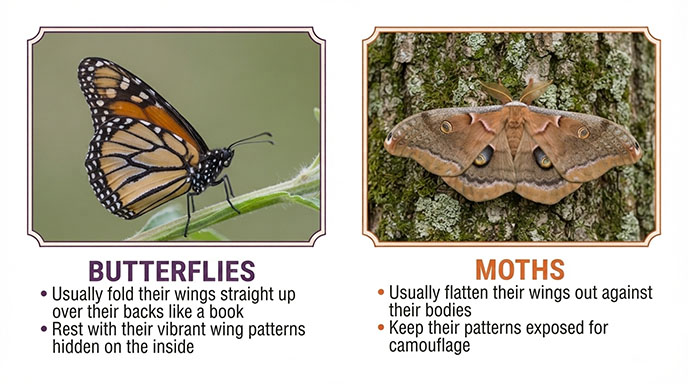
Butterflies:
- Usually fold their wings straight up over their backs like a book
- Rest with their vibrant wing patterns hidden on the inside
Moths:
- Usually flatten their wings out against their bodies (often tent-style or flat like a jet fighter)
- Keep their patterns exposed for camouflage
If it’s resting with its wings pressed flat against a wall or tree trunk, it’s almost always a moth.
Body Shape and Texture
A quick look at their bodies reveals another big difference.
Butterflies:
- Slim, smooth, and slender bodies
- Less hair/fur
Moths:
- Plump, fuzzy, and hairy bodies
- Look like they are wearing a cozy winter coat
Moths are extra fluffy to help keep them warm during chilly night flights!
Pupa Stage (Chrysalis vs. Cocoon)
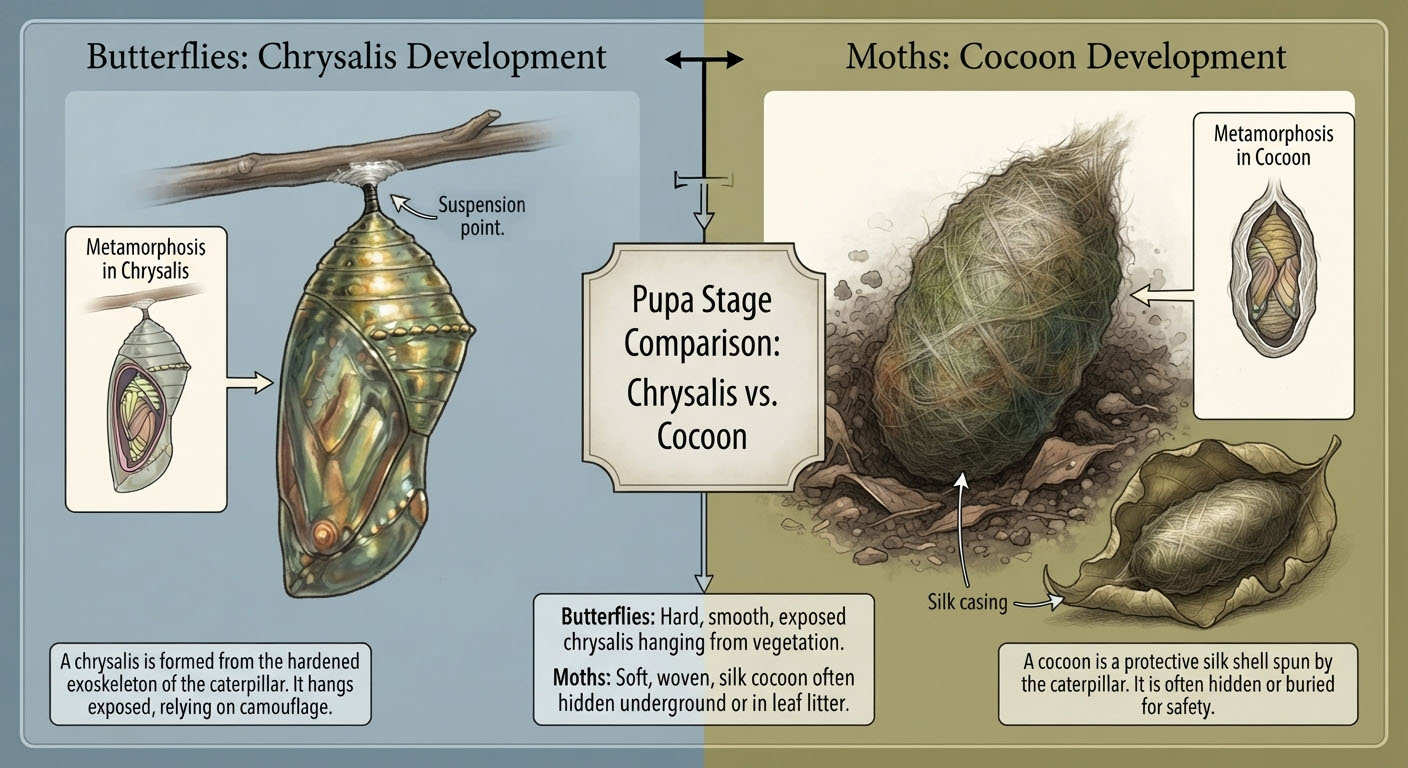
Before they turn into adults, they transform in different types of protective shells.
Butterflies:
- Form a hard, smooth shell called a chrysalis
- Usually hang unprotected from a twig or leaf
Moths:
- Spin a silk shell called a cocoon
- Often hidden underground, inside leaf litter, or wrapped in a leafy blanket
Quick Summary Table
| Feature | Butterfly | Moth |
| Antennae | Thin with clubbed tips | Feather-like or thread-like (no clubs) |
| Active Time | Daytime (Sun) | Nighttime (Dark/Lights) |
| Wing Position at Rest | Folded up over the back | Flat or tent-shaped against the body |
| Body Style | Slim and smooth | Plump, fuzzy, and hairy |
| Pupa Stage | Hard chrysalis | Silken cocoon |
Tip for Kids
Look at the antennae and wings!
- Clubbed antennae + folded wings up high? → It’s a butterfly
- Feather antennae + flat wings + fluffy body? → It’s a moth
That’s one of the fastest ways to tell them apart!