
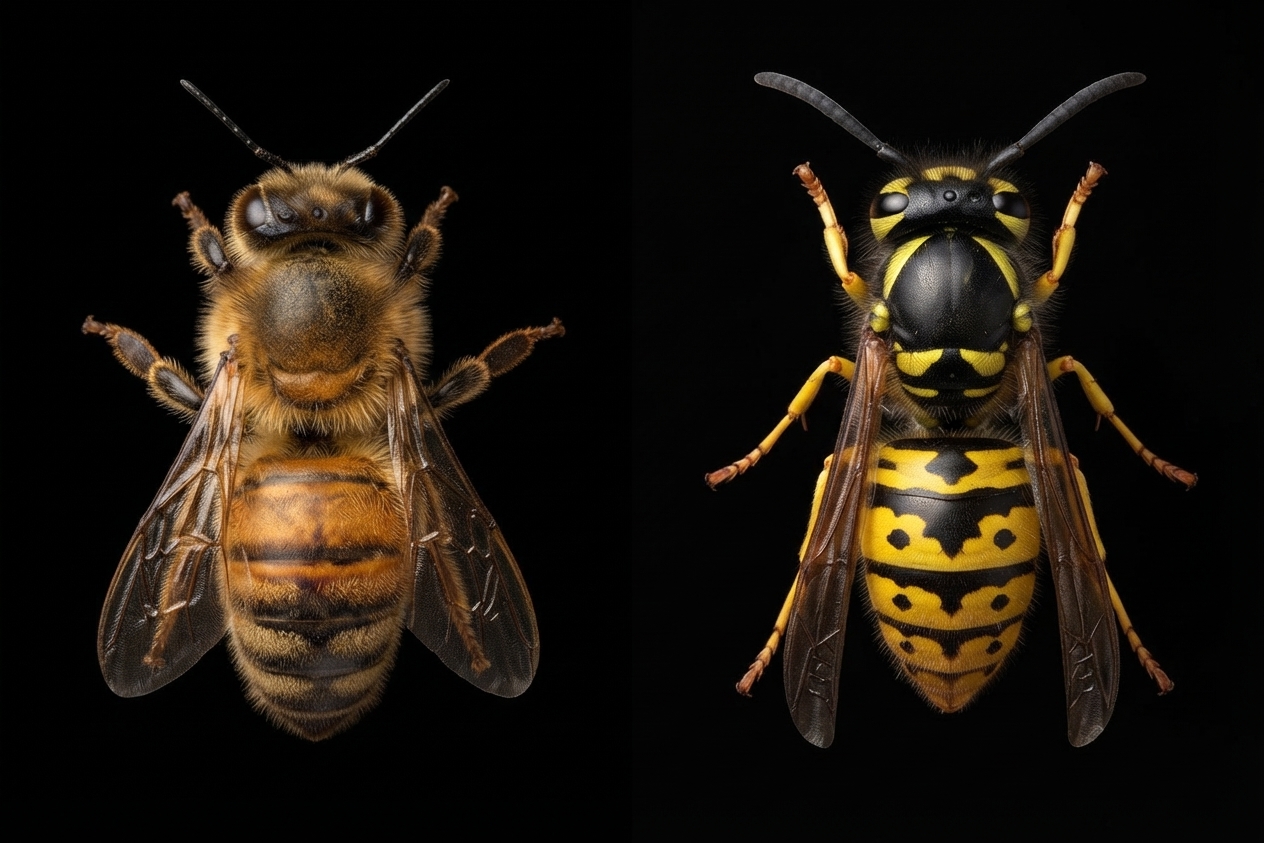
Bee vs Wasp: What’s the Difference?
Picture this: You’re chilling in the garden, enjoying a slice of cake or a juicy apple, when suddenly, a buzzing yellow-and-black insect lands right on your food.
Panic! Is it a bee? Is it a wasp? Should you run away screaming, or just stay super still?
These two flying stripey bugs look pretty similar at first glance, and they both love hanging out around sweet treats. But underneath those yellow stripes, bees and wasps are actually totally different creatures with very different jobs.
Let’s dive into the hive and find out how to tell them apart!
1. What’s Their Vibe? (Diet and Personality)
The biggest difference between a bee and a wasp comes down to what they eat.
- Bees are strict vegetarians. Bees are total sweet-tooths, but they only eat plant products. They spend their days flying from flower to flower drinking nectar (sweet plant juice) and collecting pollen (yellow plant dust). Because they are strictly plant-eaters, they usually ignore your ham sandwich or fizzy drink.
- Wasps are meat-eating hunters. Wasps might look like they want your lemonade, but adult wasps are actually predators! They hunt other insects—like flies, caterpillars, and aphids—to feed their babies. The reason wasps swarm your picnic table in the late summer is because they are hunting for sugar and protein (like meat scraps) to take back home. In short: bees want your flowers; wasps want your burger.
2. Body Shape: Fluffy vs. Sleek
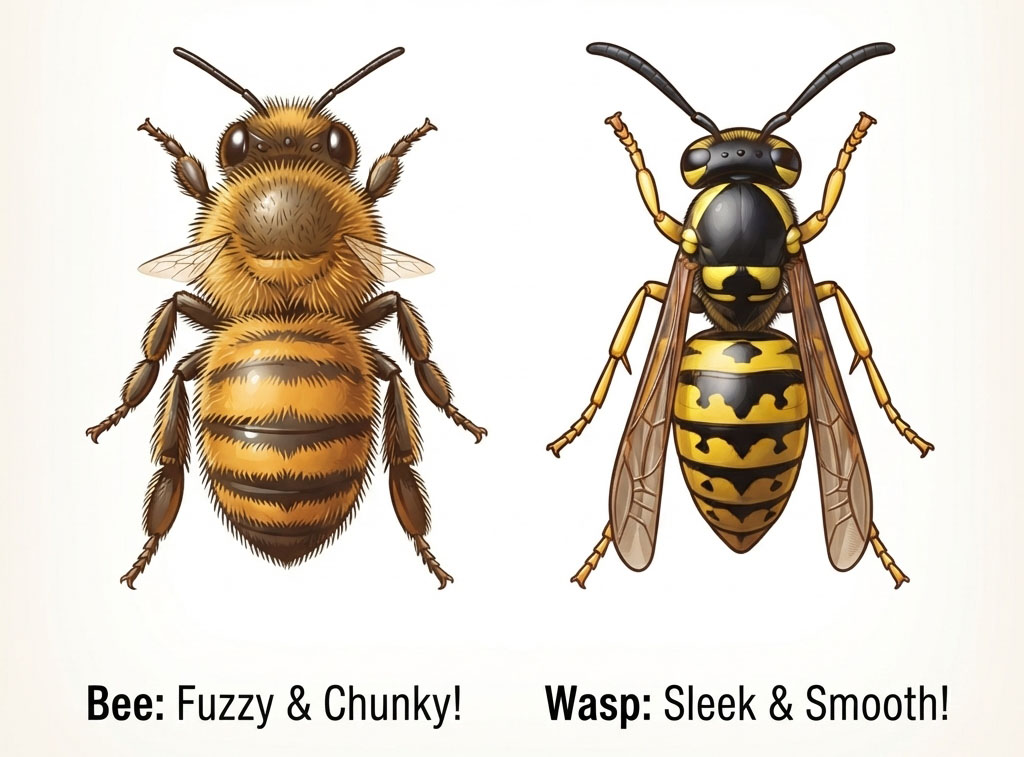
If you get a safe, close-up look (without getting too close!), you can usually tell them apart by their shape.
- Bees are fuzzy teddy bears. Bees are covered in branching, feathery hairs. Why? Because those hairs act like velcro to catch pollen grains as they zoom around flowers! Their bodies are usually rounder, chunkier, and look a bit soft and cuddly.
- Wasps are sleek athletes. Wasps are much smoother and shinier. They don’t need to collect pollen, so they don’t need the fluffy coat. Wasps also have a very narrow, pinched waist connecting their body parts—hence the phrase “wasp waist!”
3. Can They Sting You? (And What Happens Next?)
Nobody wants to get stung, but bees and wasps have totally different rules when it comes to self-defense.
- Bees are peaceful and sting only as a last resort. A honeybee’s stinger is barbed, like a little fishhook. If a honeybee stings a human, the stinger gets stuck in our stretchy skin. When the bee flies away, the stinger is ripped from its body, which sadly means the bee can only sting once and will die soon after. Because it costs them their life, bees are super reluctant to sting you—they’d much rather just fly away.
- Wasps are much more hot-tempered. Wasps have smooth stingers. This means they can pull their stinger out easily without hurting themselves. A single wasp can sting you over and over and over again if it feels threatened. Because they are fierce hunters defending their nests, wasps are much more easily annoyed and quick to use their stingers.
4. Where Do They Live?
- Bees build wax apartments. Honeybees live in hives (either managed by humans in wooden boxes or wild in hollow trees) made out of beeswax that they produce themselves. Bumblebees usually build their cozy, underground nests in patches of tall grass, old mouse holes, or under sheds.
- Wasps build paper houses. Ever seen a grey, swirling nest hanging from a tree branch or tucked under a roof? That was built by wasps! Wasp queens chew up old wood and mix it with their spit to create a kind of papier-mâché. They build intricate, multi-layered paper apartments for their colony.
Quick Comparison: Bee vs. Wasp Cheat Sheet
| Feature | 🐝 Bee | 🐝 Wasp |
| Diet | Nectar and pollen (Strict vegetarians) | Other insects, nectar, and human food (Meat-eaters/hunters) |
| Body | Round, chunky, and fuzzy | Sleek, shiny, with a super thin waist |
| Sting | Can only sting once (then they die) | Can sting multiple times |
| Attitude | Gentle; usually only stings if trapped or stepped on | Feisty and easily triggered if you swat at them |
| Home | Made of beeswax (in hives or underground) | Made of chewed-up wood pulp (paper nests) |
Why Do We Need Them?
You might think wasps are just annoying picnic crashers, but both bees and wasps are super important for nature!
- Bees are the ultimate global pollinators. Without bees buzzing around transferring pollen, we wouldn’t have yummy fruits like apples, strawberries, blueberries, or chocolate (yep, cacao trees rely on tiny pollinators too!).
- Wasps are nature’s pest controllers. Because they hunt so many caterpillars and flies to feed their young, they keep garden pests from taking over the planet. Without wasps, our gardens would be completely overrun by bugs!
So, next time you see a stripey insect zooming past your ear, don’t panic. Take a quick look: is it a fuzzy, flower-loving bee, or a sleek, hunting wasp? Now you’ll know!